
It’s common to fear therapy and worry that the process could be harmful. Here’s what to do to overcome the fear.
Therapy can be life-changing, a time to explore emotions, challenge negative thoughts, and make long-lasting changes. But despite its benefits, therapy can instill fear in clients. These fears can prevent clients from adhering to attendance.
The fear of therapy can be complex. It can stem from irrational thoughts. The fear can be emotionally involved, encompassing profound feelings and beliefs. Overcoming the fear is an essential part of rising to the challenge, while failing to conquer it may cause clients to continue experiencing problems. T
he inability to cope with the fear of therapy can prevent a much-needed process from occurring, which stops people from living their best lives. Preparation, support, and guidance are the keys to tackling these fears. With the right approach, no one has to start therapy feeling afraid or overwhelmed.
What causes people to fear therapy?
Vulnerability, trust issues, and the challenge of opening up to a stranger are known reasons for people to be fearful of therapy. Some potential clients may fear their conditions getting worse, and that therapy may only cause more pain. These beliefs are grounded in both past experiences and uncertainty. If not resolved, they can prevent people from accessing life-saving treatment.
Fear of vulnerability
Sharing and being open to feedback are critical aspects of therapy. But fear of judgment may make clients fearful. What people who fear vulnerability are afraid of is being hurt, especially in response to sharing and trusting. This underlying fear creates a sense of dread about therapy.
Fear of strangers
Getting comfortable talking to someone new isn’t easy, especially since therapy involves sharing thoughts and feelings kept close to the heart. New clients may fear the therapist will be unkind or heartless. They may worry they won’t like them and will feel uncomfortable during a session. The underlying fear that comes with meeting new people is further heightened by the power the therapist has.
Fear of life getting worse
Fearing therapy will make life worse is common and is attributed to the discomfort therapy can cause. Whether it’s tension from sharing secrets or the pain of describing trauma, the possibilities may cause people to be fearful of therapy. If a therapist can’t break this thinking down quickly, they may lose a client who is excessively worried. The risks of therapy are minimal. However, both new and existing clients can find them overburdening.
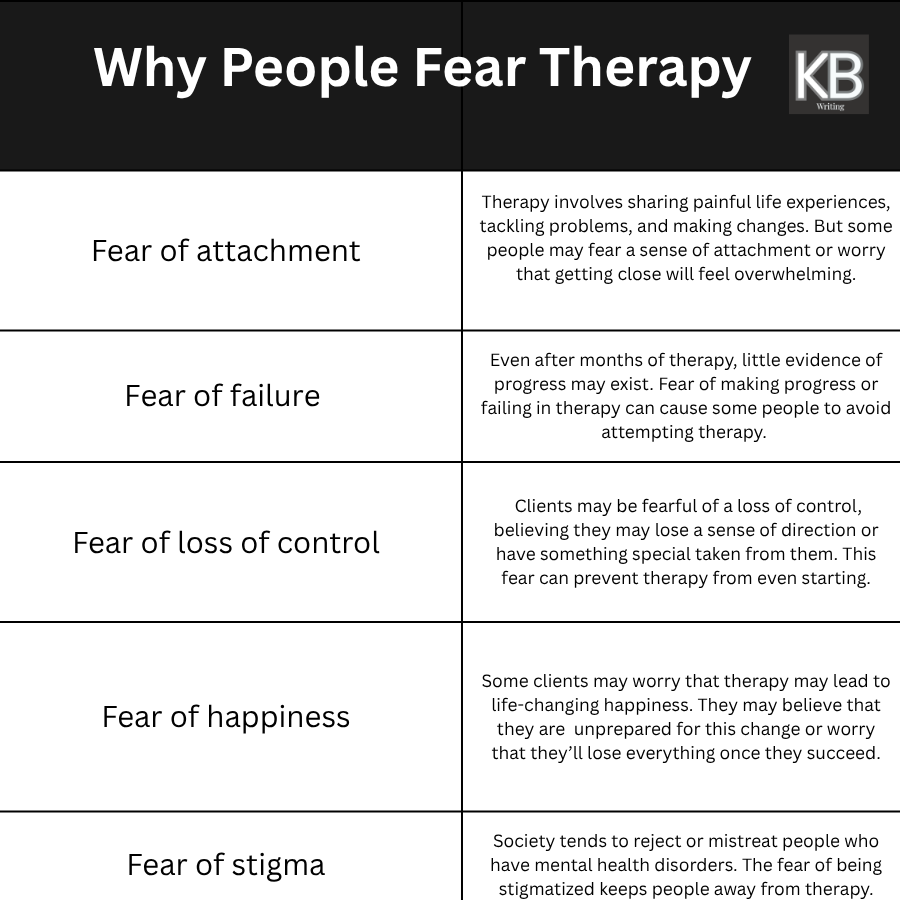
Additional issues may contribute to the fear. Examples of these issues include:
Fear of attachment
Fear of failure or rejection
Fear of loss of control
Fear of happiness
Fear of stigma
Not everyone wants to feel like they’ve been exposed. But therapy creates room for discoveries about one’s identity. Revelations occur in weeks or months and can cause people to retreat from therapy. This is especially true if the client worries they’ll uncover things they can’t accept.
Let’s take a closer look at these fears.
How therapists help
Therapists are able to help people overcome their fear of therapy due to their qualifications, treatments offered, and changes they can initiate. Therapists help clients cope with tough emotions, heal from trauma, and live their best lives— all while reducing their fear of therapy.
Cognitive-behavioral therapy: This approach puts clients in a position to challenge the thoughts that cause fear. Therapists may ask a client to question the severity of perceived threats or assist with goal setting or coping skills. They may focus on correcting learned behaviors or teaching clients to identify stressors that cause their fears. Gradual progress helps reduce a client’s fear of therapy.
A safe, comfortable space: A therapist’s office is soothing with extra plush chairs, sofas, and rugs, refreshing wall paint, and calming scents. A therapist’s office is designed to reduce the fear of therapy.
Reassuring nonverbal communication: Therapists may sit comfortably in their chairs, arms on the armrests with legs crossed to demonstrate calmness and trust. A therapist may offer a warm smile or a gentle laugh. Nonverbal communication is heavily relied on by therapists who want to reduce clients’ fears.
Expressions of empathy: A therapist may repeat back to you what you described as if they were in your position, feeling what you felt, trying to understand your perspective. This is called empathy, which helps clients overcome their fear of therapy by proving to them someone who cares will try and understand.
How to overcome the fear of therapy
Overcoming the fear of therapy can help clients improve treatment outcomes. The behavior-altering effects of therapy take weeks or months to experience, meaning, the person afraid of therapy must manage to cope for this long.
Succumbing to the fear of therapy may translate to eventual termination. However, overcoming the fear of therapy is possible. Participants need to adjust their thinking to align with the goals of therapy. They may need to focus on behavioral changes that improve the current situation.
Start small
One helpful way to approach therapy is to set smaller goals early. New clients may focus on sharing at the end of a session, brainstorming a solution, arriving earlier at the office, or opening with a compliment about themselves. The pursuit of smaller goals reduces fear by introducing the potential for earlier rewards.
Lower your expectations
Therapy clients may find it helpful to anticipate shyness, anxiety, and fear and accept them as normal. Understanding that sessions can be less-thanextraordinary helps clients relax, preventing them from being afraid. Commit to learning If therapy feels frightening, learning may help. Clients who ask questions, explore terms, and learn the reasoning for their thoughts are at a reduced risk for facing pressure. The process, which is good for the mind, reduces the fear of therapy by placing the client in a position where they can acquire invaluable insight.
Think big
Approaching therapy with huge dreams can eliminate the fear of therapy, whether the focus is on starting a business, falling in love, or traveling the world. The fear fades because hope and optimism are stronger than fear.
Build trust
It’s okay to replace problem-solving with trust-building. New clients may want to share small details about their life to gauge their therapist’s response, reducing the client’s fear as they realize the therapist is on their side. New clients don’t fear therapy when they have absolute trust in their therapists.
Relax
Deep breathing exercises are a great way to ease the fear of therapy, as are guided meditation sessions and yoga and stretching. These exercises promote peacefulness through the sound of one’s breathing or the beat of their heart. The change in focus is often enough to qualm any irrational fears.
Share your fear
Expression lets clients confront their fear of therapy — before a session. Friends can offer feedback, reassurance, guidance, and support that may be more influential than what a therapist can provide. If a client is skeptical, a wary friend can help them challenge the thoughts contributing to the fear. Personal connections may be more powerful when it comes to reducing the fear of therapy.
Find the best therapist
The Internet presents a wide variety of tools and solutions aimed at helping people find mental health services. Some platforms and websites allow visitors to narrow down a therapist search. Clients can search for specific qualifications, expertise, education, or values. Online search tools on reputable mental health websites let clients learn about their therapist before working with them, reducing their fear.
Final takeaways
Learning to overcome the fear of therapy creates opportunities for long-lasting transformations. New clients who know how to cope and manage their stress are equipped to tackle the fear of therapy early on in their first few sessions.
Breaking down the fear may call for a wide range of approaches, including behavioral changes, treatment, and changes to the environment. Many clients will also see that preparing for sessions gives them a chance to reduce their fears by providing them with time to brainstorm solutions.
Ultimately, therapists are professionals who can help clients address their fear of therapy. Instead of allowing the fear to interfere, therapists may utilize their skills to address the fear and help clients feel more comfortable during a session. No client has to feel overwhelmed by a fear of therapy. With the right approach, mindset, and support, a client can learn to overcome their fear and continue with life-changing treatment.
For more mental health information and support, follow me on X at @kevinbwriting.